

Diabetes & Metabolic Health
Support metabolic wellness, energy, insulin sensitivity, and sustainable lifestyle improvement through structured systems and personalized coaching.
What is the Thinkfit Diabetes & Metabolic Health program?
Thinkfit's Diabetes Management program combines nutrition guidance, metabolic health coaching, lifestyle systems, activity, accountability, and progress tracking to support better blood sugar management and long-term health.
Metabolic Wellness
Requires Long-Term Systems
Blood sugar imbalance is often connected to lifestyle patterns, stress, poor sleep, metabolic dysfunction, nutrition habits, low activity levels, and long-term inconsistency.
Many people struggle because short-term diets and restrictive approaches are difficult to sustain over time.
Thinkfit focuses on sustainable metabolic wellness through structured coaching, lifestyle systems, nutrition guidance, accountability, and long-term consistency.
1-on-1 personalized coaching
Access to Thinkfit coaching platform
Sustainable lifestyle systems


Consistency &
Lifestyle Balance Matter
Stress, poor recovery, inconsistent habits, sedentary lifestyles, and unsustainable routines can negatively impact long-term metabolic wellness.
Aggressive restriction-based approaches often create burnout and poor long-term consistency.
Thinkfit focuses on realistic sustainable systems designed around long-term wellness, accountability, and lifestyle improvement.
Personalized coaching, accountability systems, platform access, and sustainable wellness guidance designed around long-term transformation.
Sustainable Metabolic
Wellness Systems
Thinkfit combines personalized coaching, accountability, nutrition guidance, lifestyle optimization, and sustainable wellness systems.
Metabolic Wellness
Support sustainable metabolic balance through realistic lifestyle systems.
Lifestyle Structure
Build sustainable activity and wellness habits designed around consistency.
Stress & Recovery
Support energy, recovery, and long-term wellness through lifestyle balance.
Nutrition Systems
Structured nutrition guidance focused on sustainability instead of restriction.
Thinkfit Platform
Track progress, stay accountable, and access your wellness journey.
Sustainable Approach
Designed around realistic long-term wellness instead of temporary quick fixes.
Understanding
Type 2 Diabetes
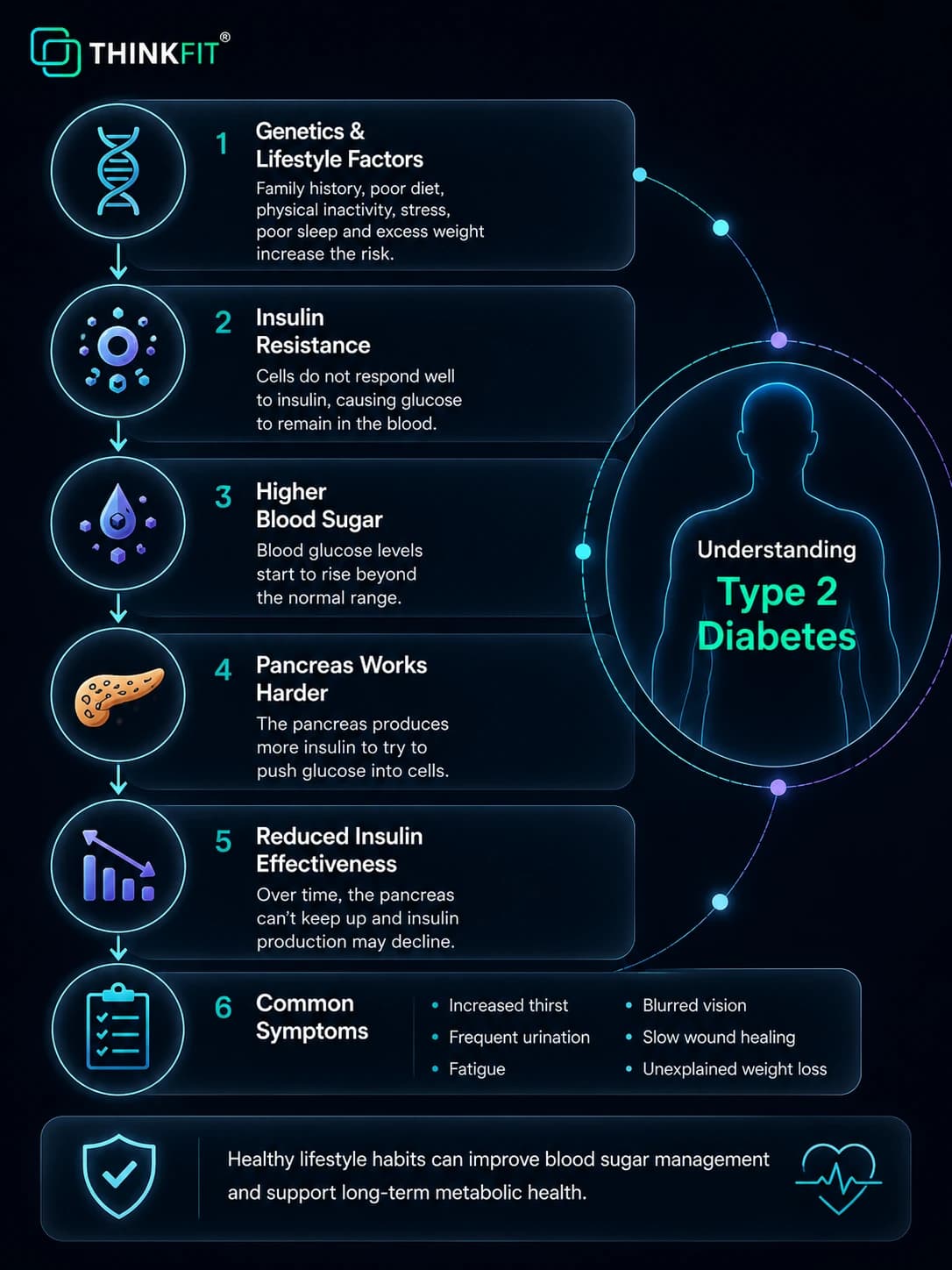
Type 2 diabetes develops when the body's cells become less responsive to insulin, causing blood sugar levels to rise over time. Initially, the pancreas produces more insulin to compensate, but this may eventually become insufficient. Healthy lifestyle habits, including balanced nutrition, regular physical activity, quality sleep and stress management, can improve insulin sensitivity and support long-term blood sugar management.
Factors That Influence
Blood Sugar
Family History
Genetics can increase the likelihood of developing Type 2 diabetes.
Insulin Resistance
Reduced insulin sensitivity is one of the main drivers of Type 2 diabetes.
Excess Body Fat
Carrying excess body fat can contribute to insulin resistance.
Poor Nutrition
Highly processed diets and excess calories may affect blood sugar regulation.
Physical Inactivity
Regular movement helps improve insulin sensitivity.
Poor Sleep
Sleep deprivation can negatively affect glucose metabolism.
Stress
Chronic stress hormones may influence blood sugar control.
Metabolic Health
Blood pressure, cholesterol and overall metabolic health are closely linked.
How Type 2 Diabetes
Can Develop
Type 2 diabetes usually develops gradually over many years. Understanding this progression highlights the importance of early lifestyle changes and ongoing blood sugar management.
Insulin Resistance
The body's cells become less responsive to insulin, making it harder for glucose to enter the cells.
Higher Blood Sugar
As glucose remains in the bloodstream, blood sugar levels begin to rise.
Pancreas Produces More Insulin
The pancreas initially compensates by producing larger amounts of insulin.
Blood Sugar Remains Elevated
Over time, the body's ability to compensate may reduce, leading to persistently elevated blood sugar.
Symptoms Develop
Fatigue, increased thirst, frequent urination and blurred vision may gradually appear.
Long-Term Health Risks
Consistently high blood sugar may increase the risk of complications affecting the heart, kidneys, eyes and nerves.
How
Insulin Works
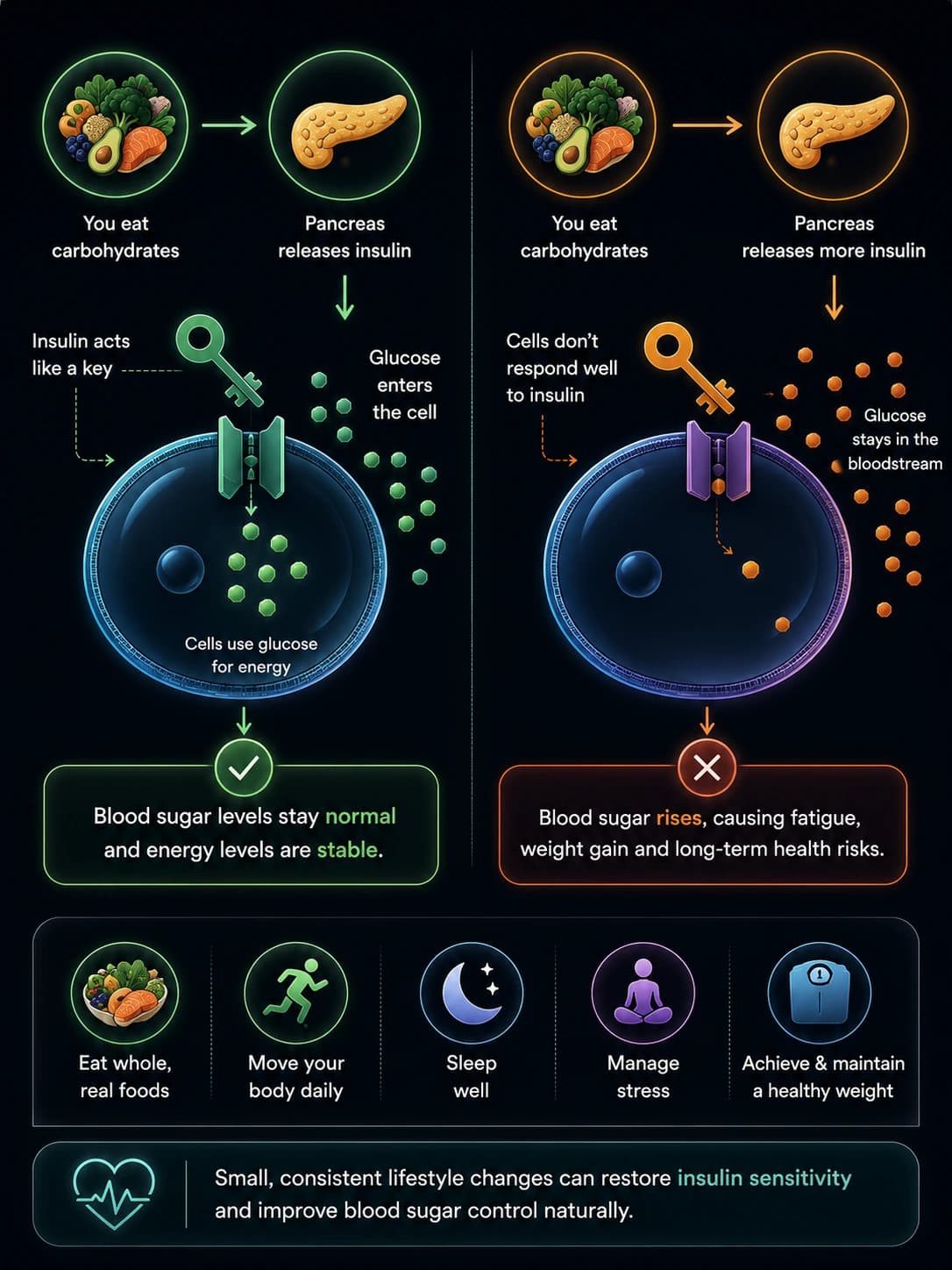
Insulin acts like a key that helps glucose move from the bloodstream into the body's cells where it is used for energy. When insulin becomes less effective, glucose remains in the bloodstream, leading to higher blood sugar levels. Supporting insulin sensitivity through sustainable lifestyle habits plays an important role in maintaining metabolic health.
Managing Diabetes
The Thinkfit Way
Sustainable lifestyle habits, regular monitoring and personalised coaching work together to support healthy blood sugar levels and long-term metabolic health.
Nutrition
Movement
Sleep
Stress Management
Blood Sugar Monitoring
Coaching & Accountability
Continue Your
Health Journey
Personalized coaching, accountability systems, platform access, and sustainable wellness guidance designed around long-term transformation.
